

Difference Between Patent, Copyright, & Trademark
Reviewed by Pooja Jha, Advocate on May 2, 2023The owner of an intellectual property right, such as a patent, copyright, or trademark, has the sole authority to use their creativity for a predetermined amount of time. Business owners who want to register their intellectual property must be aware of the variations between the three registrations in order to protect their intellectual property. The differences between trademarks, copyrights, and patents in India are examined in this article.
What is a Patent?
A patent is a legally granted, time-limited exclusive right to an invention granted to the patentee. When an innovation is protected by a patent, the patentee has the right to prevent anybody from using, manufacturing, distributing, or importing the patented good or method of making it without his or her permission. In India, a new technique or product that involves creative steps and can be used in the industry might be granted a patent.
What is Copyright?
The legal right known as copyright is awarded to persons who create sound recordings, moving pictures, and literary, artistic, and dramatic works. Factual information, such as names, slogans, abbreviations, procedures, or stories, is not covered by copyright laws. Additionally, copyright does not apply to ideas or thoughts. In order to protect the originality of works generated by writers, artists, designers, playwrights, musicians, architects, and producers of sound recordings, motion pictures, and computer software, copyright is primarily used.
What is Trademark?
A trademark is a graphic symbol, such as a word or phrase, a name, a device, a label, a number, or a combination of colors, that is used by one company on its products or services or other items of commerce to set it apart from competing products or services of a different company. As a result, trademarks are primarily used to protect company names, slogans, and brand names.
Difference between Patent, Copyright, and Trademark
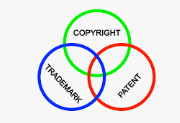
New ideas, procedures, or scientific discoveries are protected by patents; brands, logos, and catchphrases are protected by trademarks; and original literary works are protected by copyright.
What Types of Patents Are Granted in India?
Unlike the United States, India does not divide patents into utility, design, and plant categories. Patents in India are governed by a single statute, the Patents Act, 1970, which grants one kind of patent for any new product or process that involves an inventive step and is capable of industrial application. The two routes available are an ordinary patent (filed with provisional or complete specifications) and an international application under the Patent Cooperation Treaty (PCT) that designates India.
Subject matter that the US treats as separate patents is protected in India under dedicated laws instead. The ornamental shape, configuration, or pattern of an article is registered as a design under the Designs Act, 2000, and a new plant variety is registered under the Protection of Plant Varieties and Farmers’ Rights Act, 2001 - neither is a “patent” under Indian law.
What Is Included in a Trademark?
A trademark is any combination of letters, numbers, or symbols that specifically identifies a commodity or service.
Validity
Patent: Regardless of whether a patent application is filed with provisional or complete specifications, its validity is 20 years from the date of filing. However, for PCT-filed international patent applications, the patent is valid for a period of 20 years starting on the date of the international filing.
Copyright: Copyright typically lasts 60 years. The 60-year window is calculated for unique literary, dramatic, musical, and artistic works starting in the year following the author’s passing. For cinematograph films, sound recordings, images, posthumous publications, anonymous and pseudonymous publications, works of state, and works of international organizations, the 60-year window is calculated starting from the date of publication.
Trademark: Registrations for trademarks are good for ten years after the date of application. After 10 years, a trademark registration may be renewed by submitting a trademark renewal application.
Conclusion.
Depending on the kind of intellectual property you’re attempting to protect, you may want to consider filing for a patent, trademark, or copyright. A new product, logo, or creative work can all be registered with the right organization to help ensure that you can enjoy the results of your labor.
LATEST BLOG POSTS
-
 Marriage registration in Delhi
 - Process of religious conversions
- Anticipatory Bail in India: Process, Grounds & Section 482 BNSS
- Arbitration in India: A Guide to the Arbitration & Conciliation Act 1996
- BNS vs IPC: What Changed in India's New Criminal Laws
- Cheque Bounce Notice Format & Sample (Section 138)