
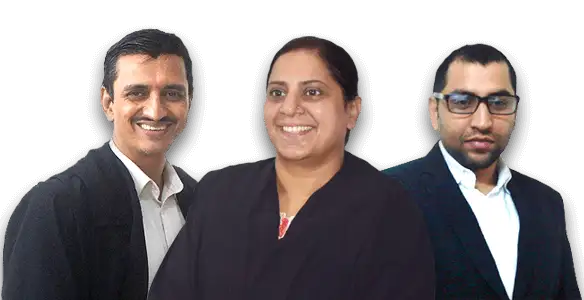

Wills, Probate & Succession Lawyers in Delhi | Estate Planning & Inheritance
Our Services
- Will drafting & registration
- Probate application & proceedings
- Succession certificate
- Legal heir certificate
- Estate planning & disputes
Understanding Wills, Probate & Succession
A Will is a legal document that declares a person’s wishes regarding the distribution of their property after death. It ensures your assets go to the people you choose, avoiding disputes among family members.
| Term | Definition |
|---|---|
| Will | Legal declaration of how property should be distributed after death |
| Testator | Person who makes the will |
| Beneficiary | Person who receives property under the will |
| Executor | Person appointed to execute the will |
| Probate | Court process to validate a will |
| Succession | Transfer of property to legal heirs |
Legal Framework
| Religion | Governing Law |
|---|---|
| Hindu, Buddhist, Sikh, Jain | Indian Succession Act, 1925 |
| Muslim | Islamic Personal Law (Shariat) |
| Christian | Indian Succession Act, 1925 |
| Parsi | Indian Succession Act, 1925 |
Note: Muslims are not governed by the Indian Succession Act, 1925. They can dispose of their property according to Islamic Law (up to 1/3rd of property through will).
Types of Succession
Testamentary Succession (With Will)
When a person dies leaving a valid will:
| Aspect | Details |
|---|---|
| Property Distribution | As per wishes in the will |
| Executor | Named person executes the will |
| Probate | May be required for immovable property |
| Disputes | Will can be challenged |
Intestate Succession (Without Will)
When a person dies without a will:
| For Hindu Male | Share |
|---|---|
| Wife | Equal share with children |
| Sons | Equal share |
| Daughters | Equal share (after 2005 amendment) |
| Mother | Equal share |
| For Hindu Female (Self-Acquired Property) | Share |
|---|---|
| Husband | Equal share with children |
| Sons | Equal share |
| Daughters | Equal share |
Class I Legal Heirs (Hindu Succession Act)
| Relation | Entitled |
|---|---|
| Son | Yes |
| Daughter | Yes |
| Widow | Yes |
| Mother | Yes |
| Son of predeceased son | Yes |
| Daughter of predeceased son | Yes |
| Son of predeceased daughter | Yes |
| Daughter of predeceased daughter | Yes |
| Widow of predeceased son | Yes |
Our Services
1. Will Drafting & Registration
| Service | Details |
|---|---|
| Simple Will | Basic distribution of assets |
| Complex Will | Multiple beneficiaries, trusts, conditions |
| Registration | Optional but recommended |
| Witnesses | 2 witnesses required |
2. Probate Application
| Aspect | Details |
|---|---|
| When Required | For immovable property in metropolitan cities |
| Court | District Court / High Court |
| Timeline | 6 months - 2 years |
| Documents | Original will, death certificate, property documents |
3. Succession Certificate
| Purpose | Details |
|---|---|
| For | Movable property (bank accounts, shares, etc.) |
| Court | District Court |
| Timeline | 3-6 months |
| Required When | No will exists or for debts/securities |
4. Legal Heir Certificate
| Purpose | Details |
|---|---|
| For | Establishing relationship with deceased |
| Issued By | Revenue authorities / Tehsildar |
| Timeline | 15-30 days |
| Required For | Government benefits, pension, insurance |
Will Drafting Requirements
Essential Elements of a Valid Will
| Element | Requirement |
|---|---|
| Testator | Must be of sound mind |
| Age | Must be major (18+ years) |
| Free Will | No coercion, fraud, or undue influence |
| Signature | Testator must sign |
| Witnesses | 2 witnesses must sign |
| Attestation | Witnesses must see testator sign |
Documents Needed for Will Drafting
| Document | Purpose |
|---|---|
| ID Proof | Identity verification |
| Property Documents | Details of assets |
| Beneficiary Details | Names, addresses, relationships |
| Executor Details | Person to execute will |
Challenging a Will
A will can be challenged on the following grounds:
| Ground | Description |
|---|---|
| Unsound Mind | Testator was not mentally capable |
| Fraud | Will obtained by deception |
| Coercion | Will made under pressure/threat |
| Undue Influence | Manipulated by beneficiary |
| Forgery | Signature or content is forged |
| Improper Execution | Not properly witnessed/signed |
Property Transfer Methods (During Lifetime)
| Method | Description | Revocable? |
|---|---|---|
| Sale Deed | Property sold to family member | No |
| Gift Deed | Property gifted without consideration | No |
| Transfer Deed | General transfer of ownership | No |
| Will | Takes effect after death | Yes (until death) |
Important: Transfer/Gift/Sale deeds executed during lifetime are generally unchallengeable. Wills can be challenged after death.
Frequently Asked Questions
Property Rights Questions
Q: What are the rights of children on mother’s property after her death?
A: If the mother left a valid will, distribution follows the will. If there’s no will, all children (sons and daughters equally) and husband have equal rights on her self-acquired property. For ancestral property, only children inherit.
Q: Can a father give his property to only one son?
A: Yes, during his lifetime, a father can give property to anyone through sale deed, gift deed, or transfer deed - these are unchallengeable. Through a will (effective after death), he can also give to one son, but other legal heirs can challenge the will in court.
Q: Can daughters claim father’s property?
A: It depends on the nature of the property. In ancestral (coparcenary/HUF) property, the Hindu Succession (Amendment) Act, 2005 made daughters coparceners by birth with the same rights as sons. The Supreme Court in Vineeta Sharma v. Rakesh Sharma (2020) confirmed this coparcenary right arises by birth and applies regardless of whether the father was alive on 9 September 2005. A father’s self-acquired property is different: he may will it to anyone he chooses, and a daughter takes a share in it only when he dies intestate (without a will), as a Class I legal heir — not by virtue of the 2005 amendment.
Will-Related Questions
Q: Is will registration mandatory?
A: No, will registration is not mandatory but highly recommended. A registered will is difficult to challenge and carries more evidentiary value.
Q: Can a will be changed after registration?
A: Yes, a testator can revoke or modify their will anytime during their lifetime. The latest will supersedes all previous wills.
Q: What happens if will is not probated?
A: In metropolitan cities (Mumbai, Kolkata, Chennai, Delhi), probate is mandatory for immovable property. Without probate, property transfer may not be possible.
Succession Questions
Q: What is the difference between probate and succession certificate?
A: Probate validates a will and is for immovable property. Succession certificate is for movable property (bank accounts, shares) when there’s no will.
Q: How long does probate take?
A: Typically 6 months to 2 years, depending on court workload and whether the will is contested.
Q: Can NRIs inherit property in India?
A: Yes, NRIs can inherit property in India. They may need to appoint a power of attorney to handle legal proceedings.
Important Legal Principles
Natural Succession vs Will
| Aspect | Natural Succession | Will |
|---|---|---|
| Preference in Law | Primary | Secondary |
| Distribution | Equal among Class I heirs | As per testator’s wishes |
| Challengeable | Rarely | Yes, on various grounds |
| Court Involvement | Succession certificate | Probate required |
Note: Under Indian law, natural succession (equal distribution among legal heirs) is the primary mode. Will is an exception to natural succession.
Timeline for Various Processes
| Process | Timeline |
|---|---|
| Will Drafting | 1-3 days |
| Will Registration | 1-2 days |
| Legal Heir Certificate | 15-30 days |
| Succession Certificate | 3-6 months |
| Probate | 6 months - 2 years |
| Property Mutation | 1-3 months |
Why Choose Our Services?
- Expert Estate Lawyers with years of experience
- Comprehensive Will Drafting covering all scenarios
- Probate Expertise for smooth court proceedings
- Succession Matters handled efficiently
- Dispute Resolution for contested wills
- NRI Services with power of attorney support
Related Services
Contact Us
Our experienced estate lawyers in Delhi can help you with:
- Will Drafting: Protect your family’s future
- Probate: Court proceedings for will validation
- Succession Certificate: For bank accounts & securities
- Legal Heir Certificate: Establish inheritance rights
- Estate Disputes: Resolve family property conflicts
Plan Your Estate Today Contact us for a consultation. We’ll help you draft a comprehensive will and guide your family through succession matters, ensuring smooth transfer of assets.
Disclaimer: This information is for general guidance only. Succession laws vary based on religion and specific circumstances. Please consult with our lawyers for advice tailored to your situation.
Frequently Asked Questions
Is it mandatory to register a will in Delhi? ▾
What is the difference between probate and a succession certificate? ▾
Do daughters have equal rights in their father's property? ▾
On what grounds can a will be challenged after death? ▾
Can NRIs inherit property in India? ▾
Wills, Probate & Succession Guides
Key guides
- ▸Daughter-in-Law Property Rights in India | DIL Rights
- ▸Equal Inheritance Right to Daughters in Ancestral Property
- ▸Hindu Widow's Property Rights: Section 14, Succession Act
- ▸What the Hindu Succession Act states about the property rights of women?
- ▸Widow's Right to Husband's Property in India
- ▸Wills, Probate and Succession- Full Guide
More Wills, Probate & Succession guides
- ›A woman has no right over the property of her in-laws other than husband - Delhi Court
- ›Gift Deed under the Transfer of Property Act, 1882
- ›Inheritance rights of step sons as per the Indian legal provisions
- ›Legal Terminology in Property Possession Matters
- ›Legal provisions of the Hindu Widows Remarriage Act, 1856
- ›Property Rights of Daughters under Hindu Law
- ›The inheritance property rights of the children born out of void marriages
- ›Various forms of property ownership in India